BotSpot case studies
Three case studies for strategies that are hard to test.
You asked for a sample. These examples show how BotSpot turns a messy trading idea into inspectable rules, backtest artifacts, trade evidence, risk checks, and a path to paper or live execution if the idea deserves it.
A public portfolio strategy that turns a changing research source into point-in-time backtests, drift checks, stale-data guards, and live rebalancing logic.
Case study 02AI trading teamA public leveraged ETF example where research, bull, bear, risk, and trader agents create a decision path that can be tested and inspected.
Case study 03Options income trade managerA custom cash-secured put and covered-call system with option screening, scoring, assignment rules, rolling rules, and capital controls.
Case study 01
External research feed to live rebalancer
This is a portfolio automation case study. The hard part is not placing one order. The hard part is turning an outside research stream into a strategy that can be replayed historically, checked for stale data, and used in live rebalancing without silently drifting away from the rules that were tested.
In the Alpha Picks example, the strategy consumes a changing research feed, stores dated snapshots, pulls the right snapshot for each simulated backtest day, filters the portfolio by rating, and rebalances when new picks are added or removed. Live mode has a data freshness guard so a stale feed does not keep trading as if nothing happened.
What the package would inspect
- How the external feed is collected, cached, and replayed by date.
- Whether the backtest used only information available at that point in time.
- How new picks, closed picks, drift bands, cash, and position sizing are handled.
- What happens if the feed is stale, unavailable, or missing a required field.
- Which parts of the process should be automated, alerted, or reviewed by a person.
Pull the latest external picks and keep dated snapshots.
Ask what the strategy knew on each historical day.
Buy new names, remove dropped names, and rebalance drift.
Block live trading if source data is stale or unavailable.
Case study 02
AI trading team for leveraged ETF rotation
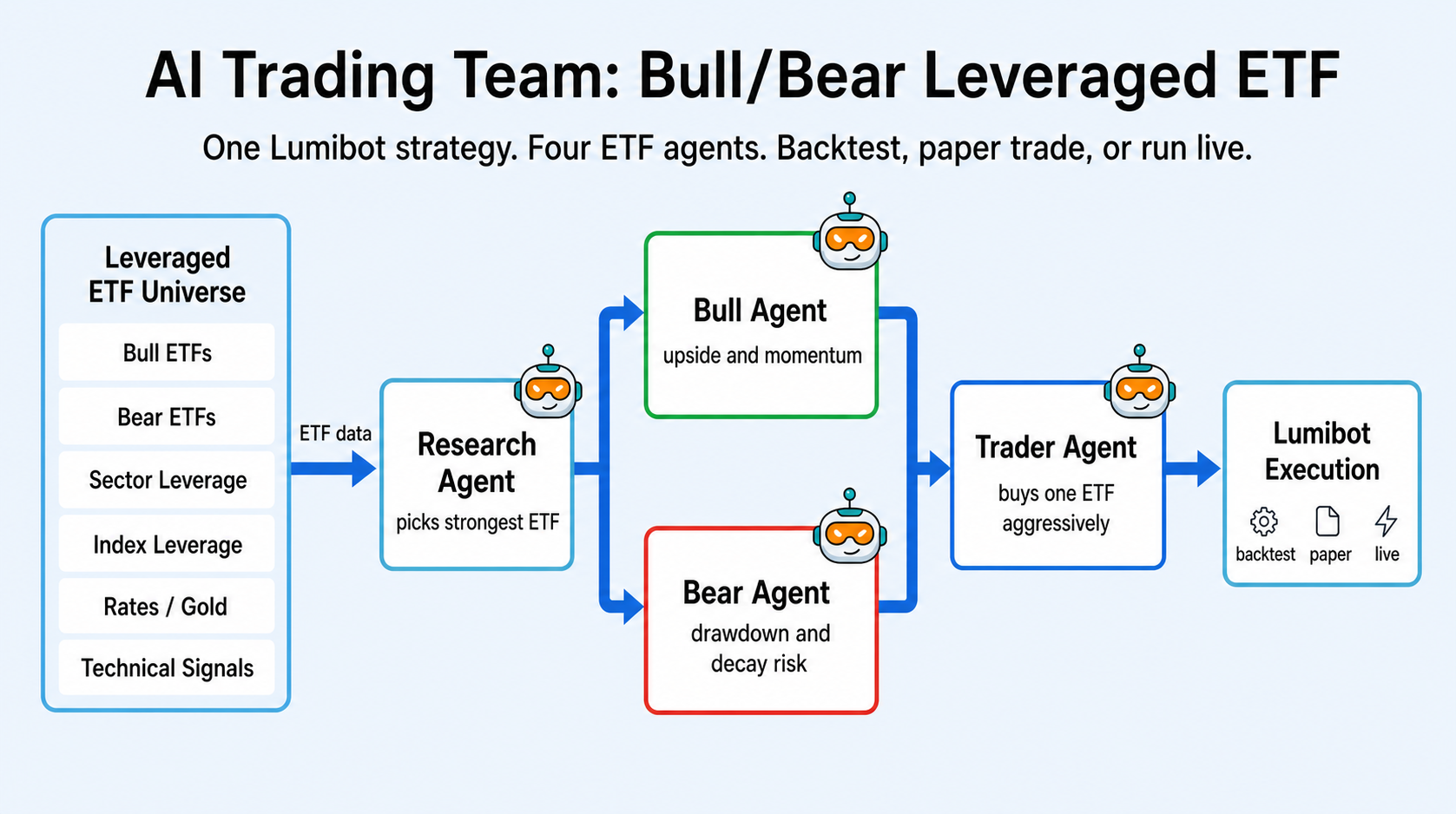
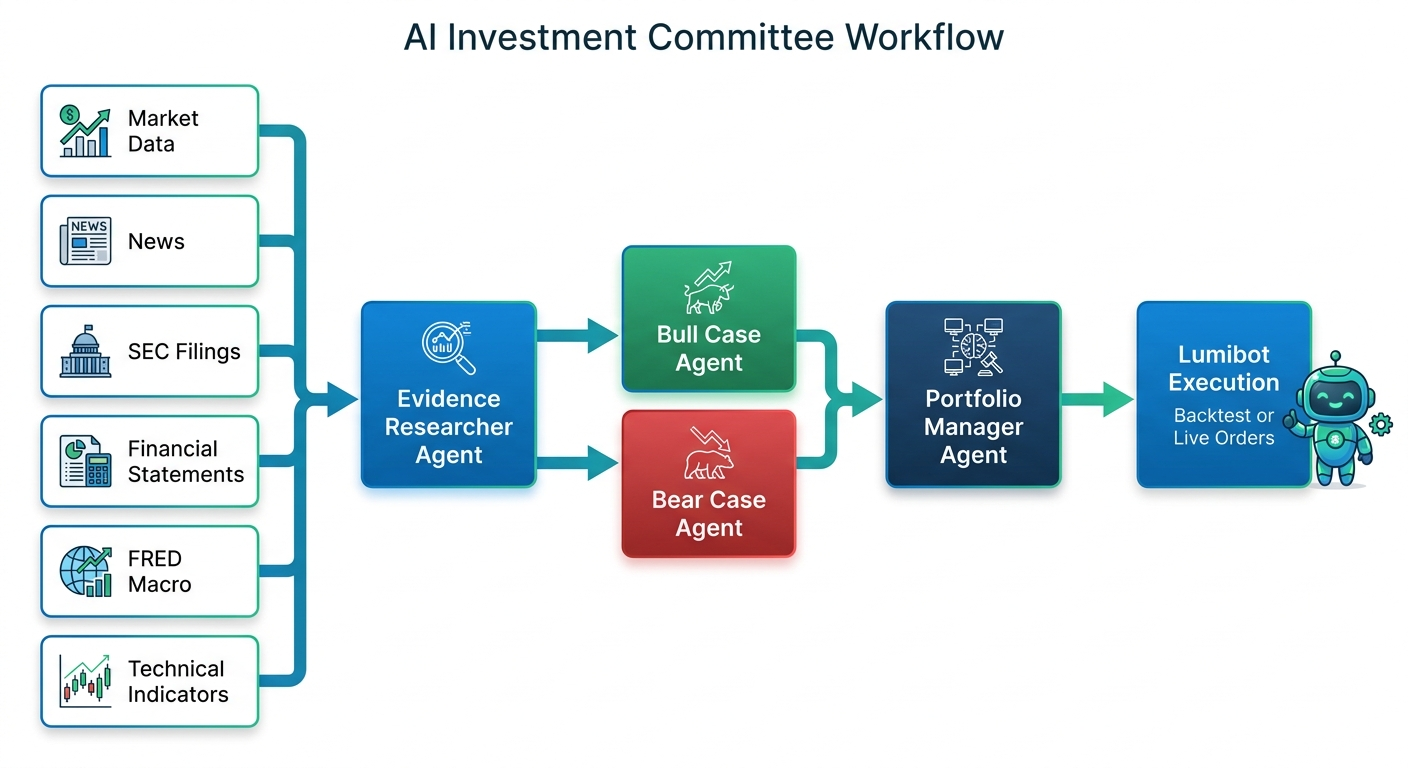
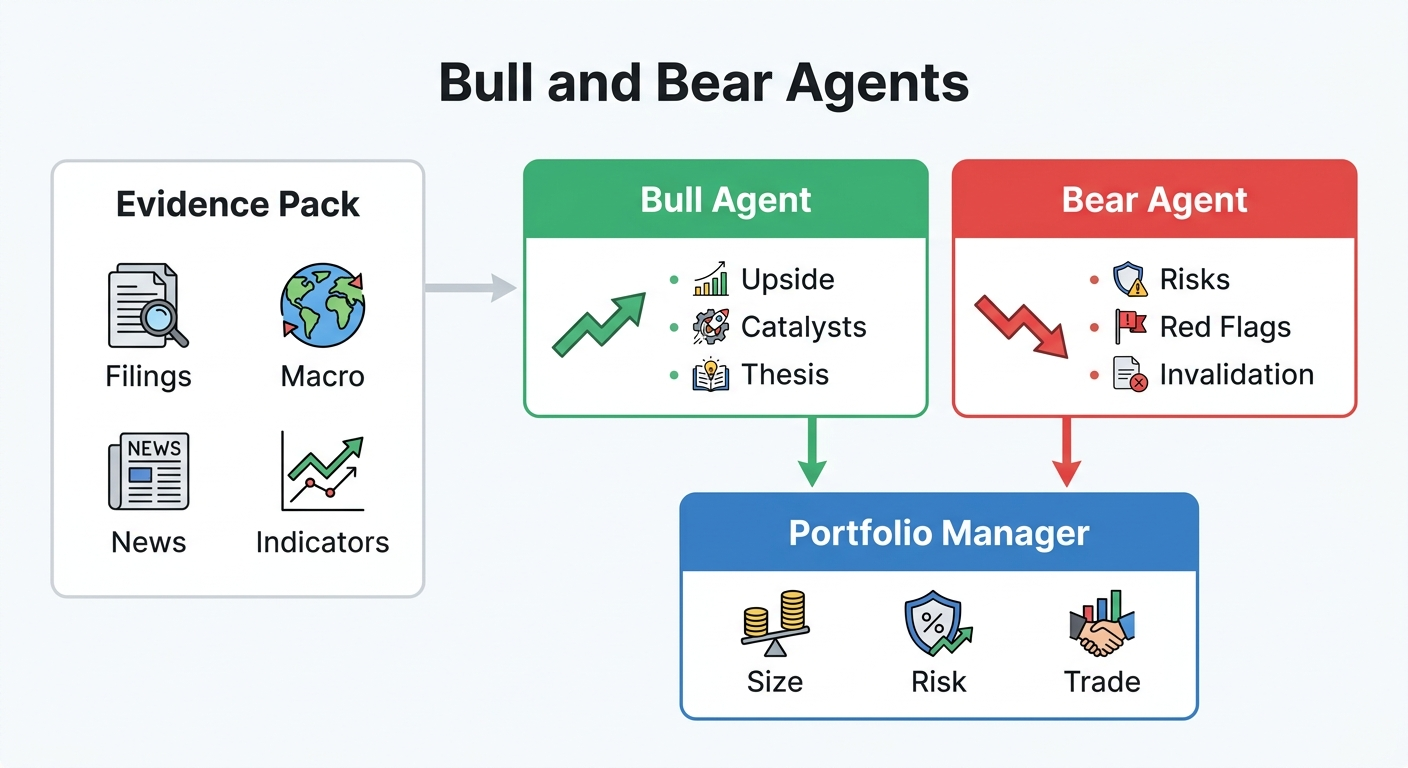
This is the AI-agent case study, but it is not the whole page. The useful lesson is that the agent process itself can be backtested. A research agent reviews the leveraged ETF universe, bull and bear agents argue the setup, and a trader agent chooses the expression to test.
The universe includes bullish and inverse leveraged ETFs across indexes, sectors, rates, gold miners, energy, real estate, and financials. That lets the strategy express risk-on or risk-off views without turning every idea into a short sale. The useful output is not a giant return number. It is the agent trace, trade decision, risk objection, order path, and failure case that a human can inspect before trusting the system.
Reviews the ETF universe and current market context.
Builds the strongest risk-on argument.
Challenges the setup with drawdown and decay risk.
Chooses the expression and prepares a backtestable action.
AI team evidence
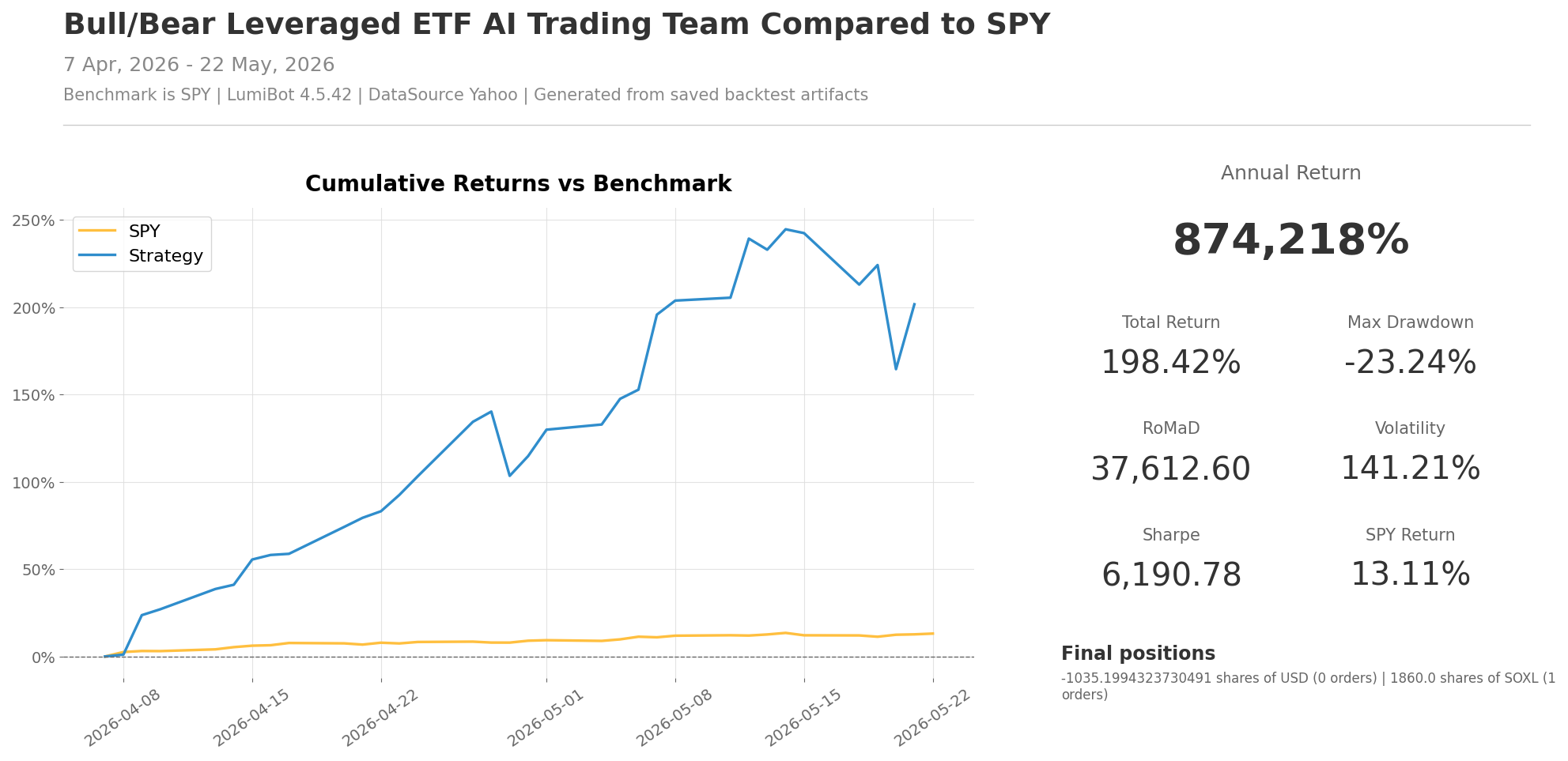
The proof is the trace, not a miracle return number.
A serious investor will not trust a giant return claim. They need to see what the system knew, what each agent argued, what trade was selected, where the risk check happened, and what still has to be tested before paper or live execution.
Case study 03
Options income trade manager
This is the custom-strategy case study. It is not live in the marketplace yet, so we are explicit about that. It is still a useful example because it shows the kind of detailed trade-management logic that normal backtest screens usually cannot express.
The strategy starts with active options candidates, filters the list, scores monthly cash-secured puts, sizes positions from available reserve capital, manages assignment, sells covered calls when assigned, and rolls positions based on price moving through the rule-defined tolerance bands.
Lifecycle the case study should walk through
- Start from a Barchart active-options export or a live scanner.
- Remove stocks below the price floor, oversized names, assigned equities, and positions already in play.
- Score put candidates across delta, weekly premium, analyst rating, and target upside.
- Size contracts from tradeable reserve cash instead of ignoring portfolio exposure.
- Sell monthly cash-secured puts in rank order until the reserve is allocated.
- If assigned, manage covered calls around cost basis instead of treating assignment as a backtest failure.
- If price breaches the tolerance band, roll out, down, up, or even based on the rule set.
Next step
Bring one hard strategy idea. We will tell you what can actually be tested.
The goal is not to send a PDF and disappear. The goal is to scope the strategy, identify the data and execution constraints, and decide whether the idea deserves a real backtest package, paper trading, or guarded automation.
Book a 20 minute strategy scope